
 (EN)
(EN)
The Psychology Behind Better Investing Decisions with Author Barry Ritholtz
Written by The Inspired Investor Team

Published on September 9, 2026
minute read
Share:


There are plenty of investment strategies people employ when trying to grow their wealth, but what if financial success comes down to understanding how your brain works and making fewer mistakes?
That’s how Barry Ritholtz, an investor, podcaster, author and co-founder of New York-based Ritholtz Wealth Management, LLC sees it. In May, his latest book, How Not to Invest: The Ideas, Numbers, and Behaviors That Destroy Wealth – and How to Avoid Them, came out in paperback and explores some of the avoidable investing mistakes people might make; how our brains influence our decisions, and his take on prediction markets. We spoke with Ritholtz about how assumptions and cognitive biases can affect returns, and why recognizing your own patterns could help reduce missteps.
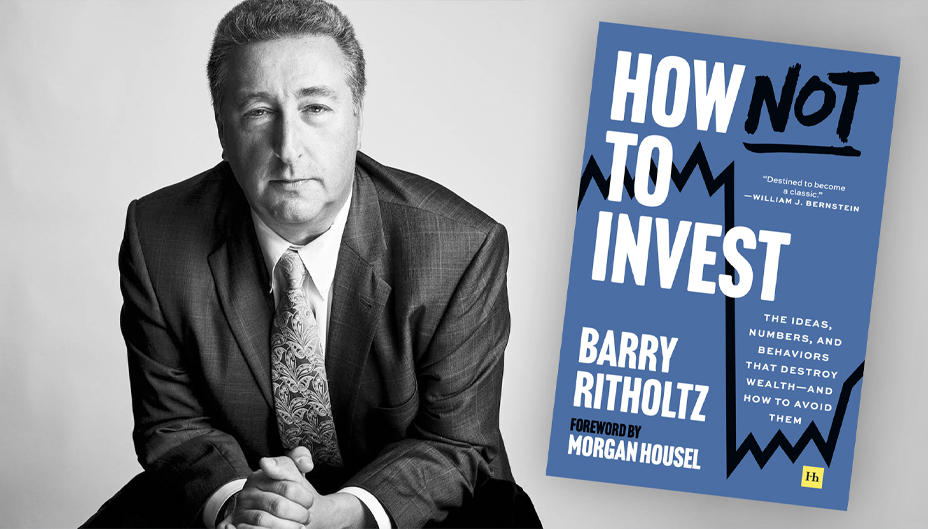
You’ve been studying investor psychology and decision-making for 30 years. Why?
Barry Ritholtz: Because investor psychology is the biggest factor in determining how successful an investor you are. Warren Buffett famously said that if you have 160 IQ points and you’re an investor, give away 30.1 You don’t need them. What you need is the right temperament, emotional control and discipline. That will have a far greater impact on your long-term performance than being smarter than the next guy. Go back to Keynes or Graham and work your way through. They all talk about the significance of behaviour.
What are some of the emotional or cognitive biases investors should be aware of?
Barry Ritholtz: One is the halo effect. This is when people are very successful in one area and we tend to think they have insight into adjacent areas. For example, someone could be a fantastic commercial real estate investor, but not a great forecaster of the economy or markets, and yet people might trust their market predictions based on their success in real estate investment.
Another bias is that we tend to underestimate how difficult it can be to find success. For instance, when it comes to those who are known for making a big call on something, did they get lucky, or were they skillful? You often can’t tell – it often takes a series of events to identify. That’s survivorship bias. We might ignore someone’s bad calls, but when suddenly they get a big one right, we might pay attention. However, they won’t necessarily be able to repeat the success, because those things could just be random, not based on skill.
Survivorship bias is why we think we can pick stocks or time the markets. We fail to recognize how prevalent failures are. For every successful book, play, movie or restaurant, how many hundreds didn’t make it? For every successful product, how many earlier designs didn’t work out?
Here’s one more bias I think is super-important. I call it “denominator blindness,” and it happens when we see a big number and fail to put it into context.
For example, when someone says the market’s down 500 points, is it the Dow or the S&P? You know, 500 points out of 5,000 is a lot, but 500 points out of 50,000 is nothing. When I hear a fund lost a billion dollars in outflows, I think is it SPY with $700 billion? Or some small fund where half of the assets just walked out the door? Without context for the denominator, you can’t form a judgment. But these big, scary numbers can capture attention, and we often don’t understand what they mean.
Can you share tips on how to make better investing decisions?
Barry Ritholtz: The big three in my book are, one: have a plan. You’d be surprised how many people don’t. It can be as simple or complex as you want. A middle-of-the-road plan is: here’s how long I want to work for, here’s what my saving rate is, here’s how much money I’ve put aside, here’s what my annual budget looks like.
I’m not a budget scold. I don’t have a problem with people buying lattes and enjoying life. That’s the purpose of money. But the one rule is live within your means. Don’t spend more than you have. Pay yourself first as an investor. And then, as part of your plan, decide how you will invest the money. So that’s number one: have a plan and the discipline to follow it.
Number two, don’t interfere with your equity investments’ ability to compound. The market averaged about 10 per cent a year over the past century.2 It’s not 10 per cent every year, that’s only the average, but it means that if you have a 42-year investment horizon [and returns averaging 10 per cent continue], your investments could essentially double every six years.
Lastly, be aware of how difficult it is to beat the market, whether you’re trying to time the market, picking stocks or doing some wacky option writing. Stock prices typically already reflect pretty much all publicly-available information.
By not interfering, do you mean avoiding frequent trading?
Barry Ritholtz: Number one, fewer decisions could equal fewer mistakes, and number two, if you set up your asset allocation correctly in the beginning, why are you changing it? There are legitimate reasons to make changes, like you get another job and you’re making a lot more money, and you think, ‘Hey, maybe I don’t need to take as much investing risk’.
In Canada, we’re just starting to get prediction markets. What’s your take on those?
Barry Ritholtz: Prediction markets, along with end-of-day single-day options, sports gambling and all the apps that allow you to bet on every play, every foul shot, every at-bat – this is pure speculation, where the average participant in prediction markets loses. This isn’t investing. It’s not “I’m going to own a business that will generate cash flow and allow me to see my investment grow over time because they have a great product or service and they’re going to get more revenue and profits.” If you’re just wagering on the outcome of something random, that’s gambling.
This interview has been edited for length and clarity.
- CNBC Make It, "As leaders in DC squabble over who’s smarter, here’s the IQ score Warren Buffett says is all you need to succeed", October 2017
- Fidelity, “What is the S&P 500® average return?”, March 2026
RBC Direct Investing Inc. and Royal Bank of Canada are separate corporate entities which are affiliated. RBC Direct Investing Inc. is a wholly owned subsidiary of Royal Bank of Canada and is a Member of the Canadian Investment Regulatory Organization and the Canadian Investor Protection Fund. Royal Bank of Canada and certain of its issuers are related to RBC Direct Investing Inc. RBC Direct Investing Inc. does not provide investment advice or recommendations regarding the purchase or sale of any securities. Investors are responsible for their own investment decisions. RBC Direct Investing is a business name used by RBC Direct Investing Inc. ® / ™ Trademark(s) of Royal Bank of Canada. RBC and Royal Bank are registered trademarks of Royal Bank of Canada. Used under licence.
© Royal Bank of Canada 2026.
Any information, opinions or views provided in this document, including hyperlinks to the RBC Direct Investing Inc. website or the websites of its affiliates or third parties, are for your general information only, and are not intended to provide legal, investment, financial, accounting, tax or other professional advice. While information presented is believed to be factual and current, its accuracy is not guaranteed and it should not be regarded as a complete analysis of the subjects discussed. All expressions of opinion reflect the judgment of the author(s) as of the date of publication and are subject to change. No endorsement of any third parties or their advice, opinions, information, products or services is expressly given or implied by RBC Direct Investing Inc. or its affiliates. You should consult with your advisor before taking any action based upon the information contained in this document.
Furthermore, the products, services and securities referred to in this publication are only available in Canada and other jurisdictions where they may be legally offered for sale. Information available on the RBC Direct Investing website is intended for access by residents of Canada only, and should not be accessed from any jurisdiction outside Canada.
Explore More

Beyond Just Spending: How to Spark an Interest in Money With Kids
Here are five simple ways to spark an interest in investing with the kids in your life
minute read

Beyond ‘Buy and Hold’: 4 Investment Strategies You May Not Have Heard Of
Different strategies can help investors manage risk, stay disciplined and make decisions. Here are four to discover
minute read

What Is an Economic Moat (and Why Does It Matter)?
Economic moats help companies fend off rivals and stay on top. Here’s how they work and why they matter.
minute read
Inspired Investor brings you personal stories, timely information and expert insights to empower your investment decisions. Visit About Us to find out more.