
 (EN)
(EN)
IPOs Explained: Pricing, Share Allocations and Lock-Up Periods
Written by The Inspired Investor team
Published on July 14, 2026
minute read
Share:


It’s shaping up to be a big year for Initial Public Offerings (IPOs). SpaceX recently made its blockbuster debut, the Canadian pharmaceutical giant Apotex went public, and more new listings are anticipated in the coming months. For example, high-profile AI companies OpenAI and Anthropic recently filed the initial paperwork that’s required to go public with U.S. regulators.1
This uptick in listings follows a recent slump in IPO activity, which some have attributed to broad economic uncertainty caused by U.S. tariffs and a higher-interest-rate environment that traditionally makes listings less appealing for issuers.2 For investors, the comeback has generated excitement – and speculation – about which company could become the next big market success story. But while IPOs often attract significant hype, they also come with unique risks, and sky-high returns are far from guaranteed. Some newly public companies soar after listing, while others struggle.3
Knowing how IPOs work can help you look past the hype and make more informed decisions about whether to participate.
What is an IPO?
An IPO is the process through which a company sells shares on a stock exchange for the first time, marking a transition from being privately held to publicly traded. Unlike private companies, public firms are subject to ongoing disclosure and reporting requirements from regulators, which give investors regular access to key financial and performance metrics. Many companies go public to raise capital to support future growth plans.
Go deeper: What Is an IPO? A look at Initial Public Offerings and How They Work.
How are IPO offer prices determined?
As you might expect, companies and their underwriters put a lot of thought into setting an IPO price, looking for the sweet spot that reflects the company’s valuation, market conditions, anticipated investor demand and other factors.4
The investment banks managing and selling the offering (also known as the underwriters) estimate the company’s value by analyzing its financial performance, growth prospects and other metrics. They then propose a preliminary price range and pitch the sale to institutional investors such as pension funds, mutual fund dealers and hedge funds. This involves numerous presentations about the company and its growth plans.
At this stage, the company and underwriters gather feedback on potential demand. Through a process called book building, they collect bids from investors who indicate how many shares they’re willing to purchase and at what price. This helps underwriters gauge interest and refine the offer price.5
Companies and underwriters must balance the incentive of a higher price with the need to generate strong demand.6 A company might want a higher offer price because it could allow them to raise more capital, and underwriters might want a higher price because their compensation is typically based on a percentage of the offering. However, both groups will likely also want to set a price that is attractive to investors, to generate strong demand.
The final IPO price is typically set the night before the stock begins trading on an exchange7 (or in the unusual case of the recent SpaceX IPO, the week before8). If demand is strong, the IPO is considered “hot” and may be priced at or above the initial range. If demand is weak, it may be priced lower. Once pricing is finalized, shares are allocated to IPO investors.
What are share allocations, and how are they decided?
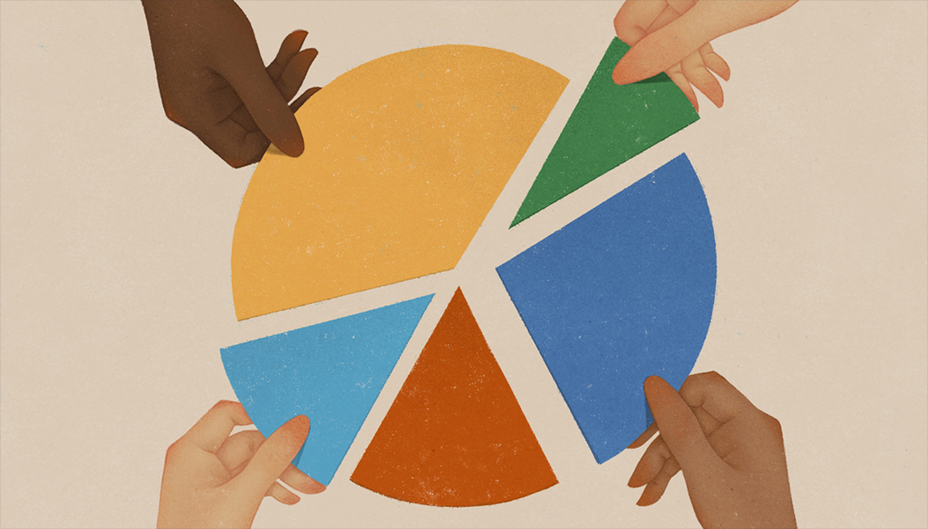
Share allocation is the process of distributing the shares to investors before they begin trading on a public stock exchange. The company and its underwriters decide how those shares will be divided between different groups of investors.9
Institutional investors usually get the largest share allocation, about 90 to 95 per cent, while retail investors receive the remaining 5 to 10 per cent.10 Institutional investors are usually allotted more IPO shares because they commit larger amounts of money and often provide more stable, long-term demand for the offering.
In the case of SpaceX, the company attracted attention by allocating more than 20 per cent of its IPO shares to retail investors. This gave more individual investors the opportunity to buy at the IPO price before public trading even began.11
If an IPO is oversubscribed – meaning investor demand exceeds the number of shares available – investors may receive only some, or none, of the shares they requested. If an investor buys shares before the stock starts trading, they’ll pay the IPO price set by the company and its underwriters rather than the market price of the stock after it’s listed.
What’s the “greenshoe option”?
If investor demand is higher than expected and the share price rises significantly from the IPO offer prices, the underwriters can exercise a “greenshoe option.” This clause is sometimes included in the IPO underwriting agreement and allows the underwriters to purchase up to an additional 15 per cent of shares at the IPO price.12
What is an IPO lock-up period?
Before buying into a newly listed company, you’ll want to know about its lock-up period. This is a contractual restriction that prevents company insiders – including founders, employees, founders’ and employees’ friends and family, and early investors such as venture capitalists – from selling shares for a specific amount of time after the company goes public.13
Lock-up periods exist to ensure insiders don’t all sell at once, which could flood the market with shares, causing the stock’s price to rapidly decline.
These periods typically last from 90 to 180 days, but timing can vary. It’s not uncommon for a company’s stock price to drop as the end of the lock-up period approaches, due to anticipation that shares will be sold once the period ends.14
Are lock-up periods mandatory?
Companies aren’t legally required to have a lock-up agreement. However, they are a standard feature of IPOs that are typically requested by the underwriters.15
If a company has a lock-up agreement, they are required to disclose the terms in their prospectus,16 which is a legal document that includes information about the company’s financial health and growth plans as well as IPO details such as the number of shares it plans to offer and the expected price range.
Lock-ups demonstrate that insiders believe in the company's long-term prospects and aren't just looking to cash out immediately. They also protect new investors by providing time to evaluate the company's performance without massive insider selling pressure.
What happens after a company goes public and shares start trading?
Once shares begin trading, it’s common for prices to fluctuate.
Take the SpaceX IPO as an example. The company priced its initial offering at US$135 per share, raising an unprecedented US$75 billion.17 The stock opened on the Nasdaq at US$150 per share on June 12, 2026 and reached a record high of US$225 during its first week of trading. But by the following week, the stock fell below its opening price.18
Early share price declines don’t necessarily determine a company’s long-term performance, though. Facebook (now Meta), for example, lost more than 50 per cent of its value during the five months following its 2012 IPO, but went on to eventually become one of the world’s most valuable companies.19
Of course, not every IPO becomes a long-term success story. A recent study shows that three years after an IPO, almost two-thirds of companies underperform the broader stock market.20
In some cases, the share price may rise steadily in a company’s first few weeks of trading. Canadian pharmaceutical company Apotex experienced a strong debut when it went public on the Toronto Stock Exchange in June, 2026. The generic drugmaker priced its IPO at CAD$24 per share. On its first day of trading, the stock opened around $28, about 17 per cent above its IPO price, reflecting strong investor demand.21 Two weeks after making its market debut, it closed at $32 per share.22
The bottom line
There are many moving parts to IPOs, with much of the process happening before a company makes its public debut. Understanding these processes, including lock-up periods, offer pricing and share allocation, can help make more informed decisions.
And while IPOs can offer the potential for significant returns, they also carry risks. Investors should always evaluate the company’s financial health, growth prospects and valuation detailed in the prospectus when considering whether to buy.
- The Guardian, “OpenAI confidentially files for initial public offering on US stock market”, June 2026
- Reuters, “Global IPO activity slumps in 2025 as tariffs, volatility weigh”, June 2025
- Nasdaq, “What Happens to IPOs Over the Long Run?”, April 2021
- Securities and Exchange Commission, “Investing in an IPO”, accessed July 2026
- LexisNexis, “Bookbuilding Definition”, accessed July 2026
- Securities and Exchange Commission, “Investing in an IPO”, accessed July 2026
- CNBC, “SpaceX IPO explained: The price is set, but retail allocation still up in the air”, June 2026
- BBC, “SpaceX says it's worth $1.75tn as it targets largest stock market debut”, June 2026
- Securities and Exchange Commission, “Initial Public Offerings, Why Individuals Have Difficulty Getting Shares”, accessed July 2026
- Reuters, “Musk rewrites IPO playbook with large slice of SpaceX stock for retail investors, source says”, March 2026
- Reuters, “SpaceX sets $135 price for blockbuster IPO, upending Wall Street convention”, June 2026
- Securities and Exchange Commission, “Excerpt from Current Issues and Rulemaking Projects Outline (November 14, 2000)”, accessed July 2026
- Securities and Exchange Commission, “Initial Public Offerings: Lockup Agreements”, 2011
- Securities and Exchange Commission, “Initial Public Offerings: Lockup Agreements”, 2011
- Goodmans LLP, “Going Public in Canada”, January 2025
- Securities and Exchange Commission, “Initial Public Offerings: Lockup Agreements”, 2011
- Reuters, “SpaceX sets $135 price for blockbuster IPO, upending Wall Street convention”, June 2026
- Google Finance, “Space Exploration Technologies Corp”, accessed July 2026
- RBC Wealth Management, “What is an IPO? A look at initial public offerings and how they work”, accessed July 2026
- Nasdaq, “What Happens to IPOs Over the Long Run?”, April 2021
- The Globe and Mail, “Apotex shares jump in largest TSX debut since 2021”, June 2026
- Yahoo! Finance, “Apotex Health Corp. (APTX.TO)”, accessed July 2026
RBC Direct Investing Inc. and Royal Bank of Canada are separate corporate entities which are affiliated. RBC Direct Investing Inc. is a wholly owned subsidiary of Royal Bank of Canada and is a Member of the Canadian Investment Regulatory Organization and the Canadian Investor Protection Fund. Royal Bank of Canada and certain of its issuers are related to RBC Direct Investing Inc. RBC Direct Investing Inc. does not provide investment advice or recommendations regarding the purchase or sale of any securities. Investors are responsible for their own investment decisions. RBC Direct Investing is a business name used by RBC Direct Investing Inc. ® / ™ Trademark(s) of Royal Bank of Canada. RBC and Royal Bank are registered trademarks of Royal Bank of Canada. Used under licence.
© Royal Bank of Canada 2026.
Any information, opinions or views provided in this document, including hyperlinks to the RBC Direct Investing Inc. website or the websites of its affiliates or third parties, are for your general information only, and are not intended to provide legal, investment, financial, accounting, tax or other professional advice. While information presented is believed to be factual and current, its accuracy is not guaranteed and it should not be regarded as a complete analysis of the subjects discussed. All expressions of opinion reflect the judgment of the author(s) as of the date of publication and are subject to change. No endorsement of any third parties or their advice, opinions, information, products or services is expressly given or implied by RBC Direct Investing Inc. or its affiliates. You should consult with your advisor before taking any action based upon the information contained in this document.
Furthermore, the products, services and securities referred to in this publication are only available in Canada and other jurisdictions where they may be legally offered for sale. Information available on the RBC Direct Investing website is intended for access by residents of Canada only, and should not be accessed from any jurisdiction outside Canada.
Explore More

Split Share Funds: The Fund You've Probably Never Heard Of
Here’s how split shares work, why investors might consider them and what to know about the risks
minute read

How To Spot a Bank Impersonation Scam and What To Do Next
We break down the warning signs of these scams and what to do next
minute read
What Is an IPO? A look at Initial Public Offerings and How They Work
Explore how IPOs work and what you should know before buying into new listings
minute read
Inspired Investor brings you personal stories, timely information and expert insights to empower your investment decisions. Visit About Us to find out more.