
 (EN)
(EN)
Hopping Sideways: A Look at Kangaroo Markets
Written by The Inspired Investor Team
Published on October 2, 2026
minute read
Share:


If you surveyed a group of investors, you might get a lot of different opinions as to where markets are going in the near future. Some might say we’re about to enter a bull market, others might be afraid we’re on the brink of a bear market, and some might refer to a third market animal and say we’re in a kangaroo market.
What is a kangaroo market?
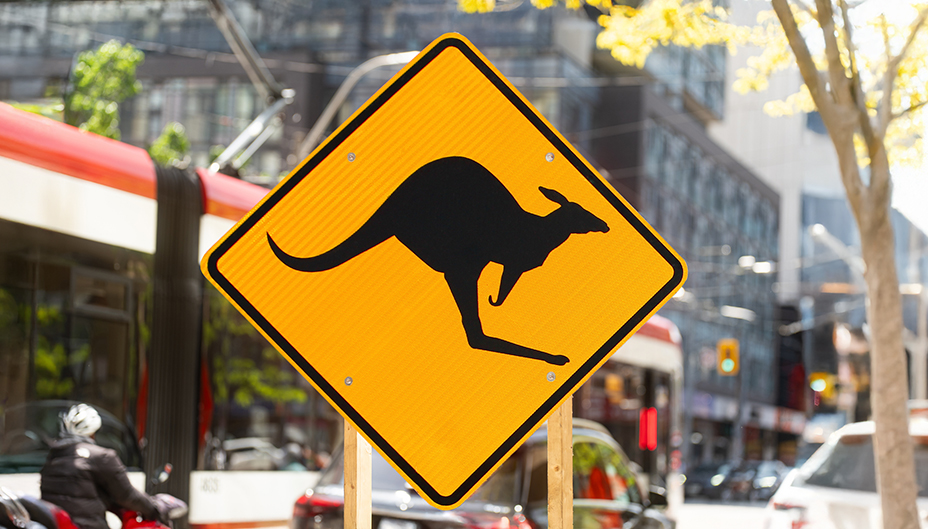
A kangaroo market is commonly defined as one where prices move sideways in a range with unpredictable ups and downs. It typically lacks the consistent, longer-term up or down trends of a bull or bear market.
Where did market animals come from?
Before we jump into what causes a kangaroo market, let’s talk briefly about two other popular animals used to define market trends – bears and bulls.
There are several theories behind the origins of these animals as symbols of stock investing, and some go back as far back as the 17th century.
A bull market describes a set of circumstances where stock prices rise (though not necessarily in a straight line) – generally over a prolonged period. The typical threshold for a bull market is a 20 per cent increase in an index from the recent low. Unsurprisingly, bull markets are often considered to be positive as they align with the growth of wealth.
One of the most famous representations of a bull market is the Charging Bull statue in the Financial District of Manhattan. This statue is made of bronze, weighs over 7,000 pounds, and was created by Italian artist Arturo De Modica after the 1987 Black Monday stock market crash. It has become a tourist attraction in the Financial District and for many it has become a physical symbol of the stock market itself.
A bear market is the opposite of a bull market, where the market is generally moving down over an extended period (again, not necessarily in a straight line, there might be rallies along the way). A common threshold for defining a bear market is a drop of at least 20 per cent or more from previous market peaks. A smaller decline might be defined as a pullback (5-10 per cent decrease) or a correction (10-20 per cent decrease).
What causes a kangaroo market?
There are a number potential causes for a kangaroo market:
- Changing market narratives and economic indicators: Economic data can signal clear directions for the market, but when that data is mixed (good news and bad news indicators competing), it can be challenging for the market to find a clear direction.
- Conflicting policies: When economic policies are mixed or potentially conflict with each other (i.e., raising taxes while trying to promote growth), the market is stuck guessing and confused investors may take action that can cause markets to move in a sideways range rather than going significantly up or down.
- Exhausted momentum: A market can’t rise or fall forever. Sometimes a kangaroo market comes about after a major market rally or drop, when momentum is exhausted and there are no new major catalysts, such as earnings announcements or product launches.
What does this mean for you?
The long-term impact of a single bull, bear or kangaroo market could be smaller than people might think. Often, people might focus on a single market cycle or day in the markets, when they could still have years or decades before they hit their financial goal.
If you’re investing for longer-term goals like buying a house or a comfortable retirement, there will likely be multiple market cycles before you hit your goals.
“For disciplined investors, a kangaroo market can actually be an attractive environment,” says Andrew Lennie, CFA and Portfolio Advisor with RBC InvestEase.
“Sharp reactions to individual headlines can create temporary mispricing and market dislocations, particularly when markets become overly focused on the latest concern such as geopolitics, tariffs, oil prices or AI hype. The key is to zoom out and put things in perspective. If you think back to what was dominating the headlines a few years ago, the vast majority of what seemed capable of derailing markets ultimately proved to be just noise. The same volatility that creates uncertainty can also create opportunities for investors who stay disciplined.”
There are opportunities in almost every market. Regardless of the market you find yourself in, you should still conduct your own due diligence and make sure you understand and are confident in your investment choices.
RBC Direct Investing Inc. and Royal Bank of Canada are separate corporate entities which are affiliated. RBC Direct Investing Inc. is a wholly owned subsidiary of Royal Bank of Canada and is a Member of the Canadian Investment Regulatory Organization and the Canadian Investor Protection Fund. Royal Bank of Canada and certain of its issuers are related to RBC Direct Investing Inc. RBC Direct Investing Inc. does not provide investment advice or recommendations regarding the purchase or sale of any securities. Investors are responsible for their own investment decisions. RBC Direct Investing is a business name used by RBC Direct Investing Inc. ® / ™ Trademark(s) of Royal Bank of Canada. RBC and Royal Bank are registered trademarks of Royal Bank of Canada. Used under licence.
© Royal Bank of Canada 2026.
Any information, opinions or views provided in this document, including hyperlinks to the RBC Direct Investing Inc. website or the websites of its affiliates or third parties, are for your general information only, and are not intended to provide legal, investment, financial, accounting, tax or other professional advice. While information presented is believed to be factual and current, its accuracy is not guaranteed and it should not be regarded as a complete analysis of the subjects discussed. All expressions of opinion reflect the judgment of the author(s) as of the date of publication and are subject to change. No endorsement of any third parties or their advice, opinions, information, products or services is expressly given or implied by RBC Direct Investing Inc. or its affiliates. You should consult with your advisor before taking any action based upon the information contained in this document.
Furthermore, the products, services and securities referred to in this publication are only available in Canada and other jurisdictions where they may be legally offered for sale. Information available on the RBC Direct Investing website is intended for access by residents of Canada only, and should not be accessed from any jurisdiction outside Canada.
Explore More

'This is the New Casino': Why Gen Z Is Betting on Sports and Prediction Markets
26% of Gen Z investors said sports betting was part of their long-term financial strategy", a recent study found
minute read

Why Aren’t Markets Moving on Tariff News?
RBC Global Asset Management ‘s Eric Savoie explains why markets might not react like you expect
minute read
The Big Question: Is the P/E Ratio a Reliable Metric for Investors Today?
We look at what the P/E ratio is, and whether it still matters
minute read
Inspired Investor brings you personal stories, timely information and expert insights to empower your investment decisions. Visit About Us to find out more.