
 (EN)
(EN)
Mid-Year Outlook: Stocks, Bonds and Impact of War
Written by The Inspired Investor Team

Published on July 24, 2026
minute read
Share:


Sarah Riopelle, Managing Director, Senior Portfolio Manager and Global Chief of Staff at RBC Global Asset Management, recently joined The Download podcast to share her mid-year outlook on stocks, bonds and the Iran war's impact on markets.
Here are some highlights from the July 10 episode, in which she discusses the case for diversification, recent activity within the portfolios she oversees, and alternative investments.
The situation in Iran has once again escalated. What impact do you think this may have on markets?
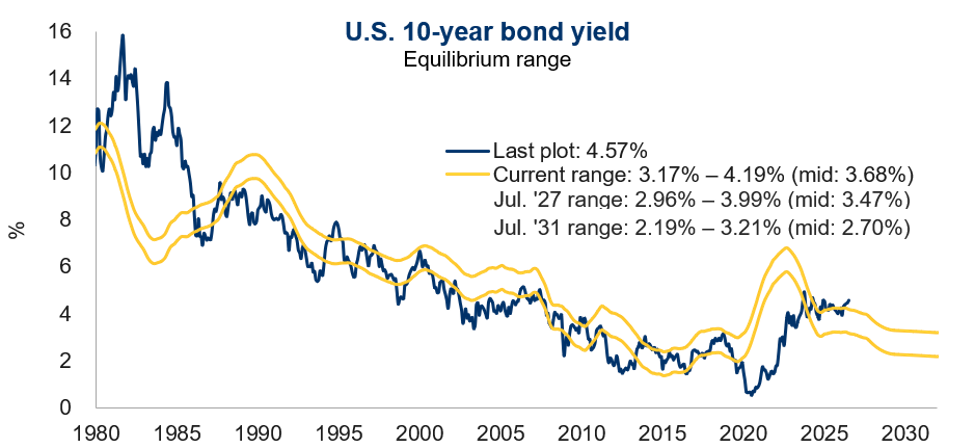
[The recent] collapse of the ceasefire sent oil prices and bond yields trending higher due to inflation fears. But… as we can see from the last several weeks and months, the situation is fluid and rapidly changing.
Markets now anticipate a rate hike in October instead of December as previously expected. Major stock markets sold off in the wake of this re-escalation but settled down after Trump suggested he doesn’t think a full-scale war will restart.
I don’t think either side wants all-out war, so this adjustment in markets could be fairly short-lived. The most likely scenario is that talks will resume, which could see many of these market movements unwind, particularly for oil and bond yields.
Economic growth has been resilient so far this year despite these headwinds. What can we expect for the rest of this year?
The economic backdrop remains resilient with data outperforming last year’s levels. AI-related spending, fiscal stimulus and productivity gains are all driving economic growth. Our base case is for the U.S. economy to avoid recession this year as these positive forces are offsetting the drag from the energy shock associated with the Iran war.
Oil prices have mostly normalized despite unresolved tensions in the Middle East. But because of the ongoing shipping challenges in the Strait of Hormuz, the central economic problem created by the war has not yet been solved. Inflation has already started rising due to higher energy costs and lagged effects of last year's tariff hikes.
Central banks are now thinking more about rate hikes than cuts. If inflation proves temporary (which is our base case), they may hike less than current forecasts suggest.
Given rising inflation and changing central bank policy forecasts, what are your expectations for bond yields going forward?
Note: As of July 17, 2026. Source: RBC GAM.
We’ve seen bond market volatility since the war in Iran began. We remain underweight on fixed income but have been tactically adjusting our bond exposures to take advantage of the volatility and capture value.
We forecast low-to-mid single-digit returns for government bonds. Corporate bonds offer potentially higher returns, but the added compensation for taking credit risk is historically small. A supportive economy could keep spreads narrow for some time.
Equities have continued to rally. Can investors expect this trend to continue?
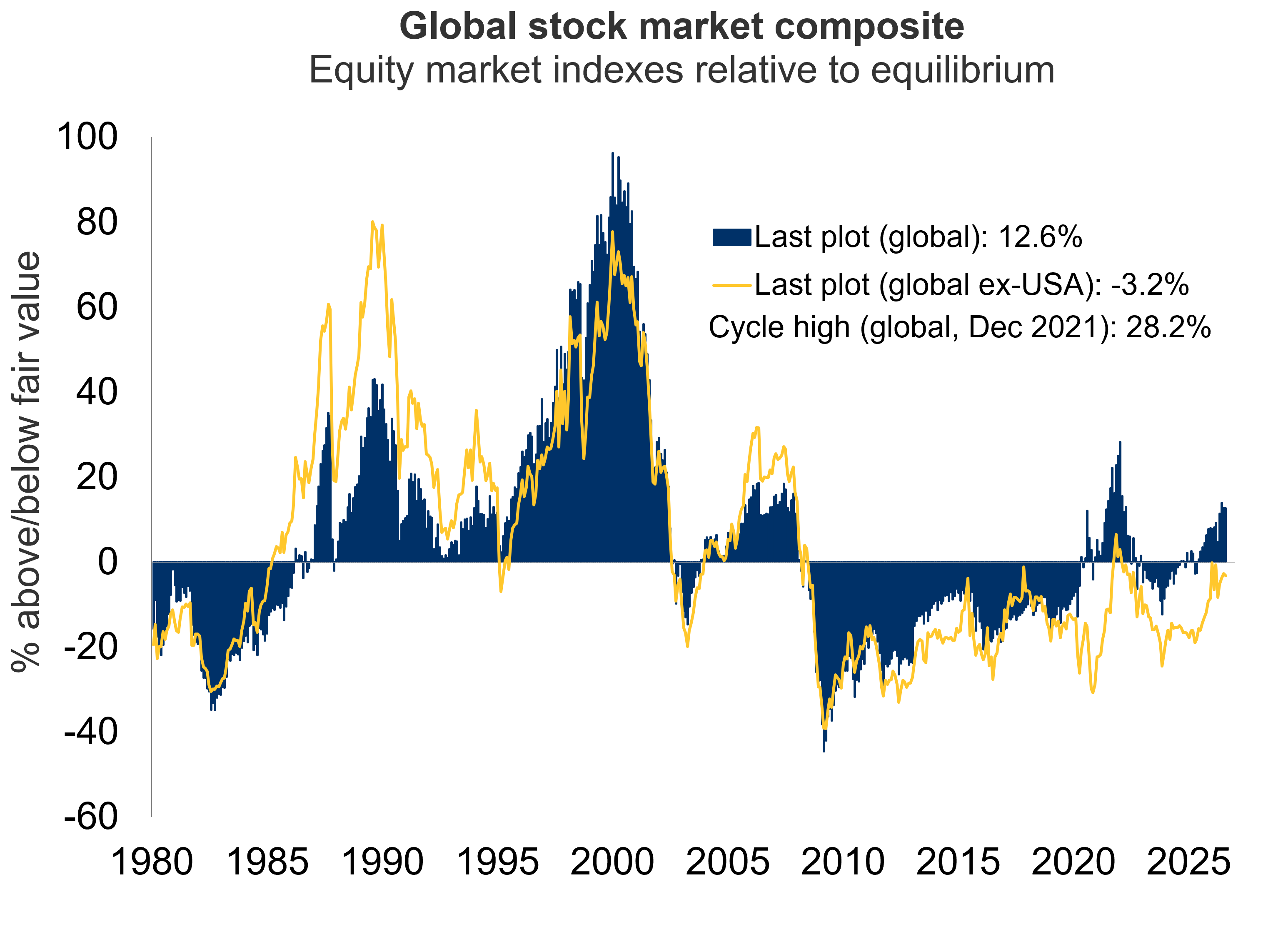
Stocks have surged this past year on AI optimism, trade policy easing and earnings upgrades, with tech-heavy indices leading gains. This has pushed valuations to expensive levels. Our composite of global equity markets is now 20 per cent above fair value, the highest reading since late 2021.
Note: As of July 16, 2026. Source: RBC GAM.
Investors have accepted these high valuations because the earnings outlook has greatly improved and is being upgraded at an unusually rapid pace. Consensus S&P 500 earnings estimates for 2026 have been revised higher by 20 per cent over the past year.
AI hyperscalers, such as Microsoft, Amazon, Google, Meta and Apple, are driving the earnings acceleration through their outsized spending. This spending has also benefited companies building AI infrastructure, particularly chip makers.
Current expensive stock valuations are consistent with low-single-digit returns. However, a variety of tailwinds could keep stocks performing relatively well in the near term.
Stocks remain vulnerable if the outlook worsens. We are maintaining a slight overweight in equities given our view that stocks are likely to outperform bonds, with a renewed tilt towards U.S. markets given their technological leadership, energy independence and robust earnings growth.
Have you made any other changes to your portfolios this year?
One area we have been focusing on is alternatives [assets that fall outside the traditional categories of stocks and bonds, and that can include real estate and private equity]. Alternatives generally have low correlation to traditional asset classes, so in some cases may improve diversification.
However, investors always need to remember there are pros and cons to every asset class. Before making any investment decision, it’s important to assess:
- Impact on risk and return
- Diversification benefits
- Fees
- Liquidity
- Capacity
- Transaction costs
The interview above has been edited for clarity and length. Learn more about The Download podcast and listen to episodes here.
RBC Direct Investing Inc., RBC Global Asset Management Inc. and Royal Bank of Canada are separate corporate entities which are affiliated. RBC Direct Investing Inc. is a wholly owned subsidiary of Royal Bank of Canada and is a Member of the Canadian Investment Regulatory Organization and the Canadian Investor Protection Fund. Royal Bank of Canada and certain of its issuers are related to RBC Direct Investing Inc. RBC Direct Investing Inc. does not provide investment advice or recommendations regarding the purchase or sale of any securities. Investors are responsible for their own investment decisions. RBC Direct Investing is a business name used by RBC Direct Investing Inc. ® / ™ Trademark(s) of Royal Bank of Canada. RBC and Royal Bank are registered trademarks of Royal Bank of Canada. Used under licence.
© Royal Bank of Canada 2026.
Any information, opinions or views provided in this document, including hyperlinks to the RBC Direct Investing Inc. website or the websites of its affiliates or third parties, are for your general information only, and are not intended to provide legal, investment, financial, accounting, tax or other professional advice. While information presented is believed to be factual and current, its accuracy is not guaranteed and it should not be regarded as a complete analysis of the subjects discussed. All expressions of opinion reflect the judgment of the author(s) as of the date of publication and are subject to change. No endorsement of any third parties or their advice, opinions, information, products or services is expressly given or implied by RBC Direct Investing Inc. or its affiliates. You should consult with your advisor before taking any action based upon the information contained in this document.
Furthermore, the products, services and securities referred to in this publication are only available in Canada and other jurisdictions where they may be legally offered for sale. Information available on the RBC Direct Investing website is intended for access by residents of Canada only, and should not be accessed from any jurisdiction outside Canada.
Explore More

Canada Investment Summit: What It Means for Investors
The Canada Investment Summit’s goal was to attract $1 trillion in new investment. We break down what it means for investors.
minute read

'This is the New Casino': Why Gen Z Is Betting on Sports and Prediction Markets
26% of Gen Z investors said sports betting was part of their long-term financial strategy", a recent study found
minute read

Why Aren’t Markets Moving on Tariff News?
RBC Global Asset Management ‘s Eric Savoie explains why markets might not react like you expect
minute read
Inspired Investor brings you personal stories, timely information and expert insights to empower your investment decisions. Visit About Us to find out more.